

Green Jobs Talent demand Is Creating a New Corporate Risk

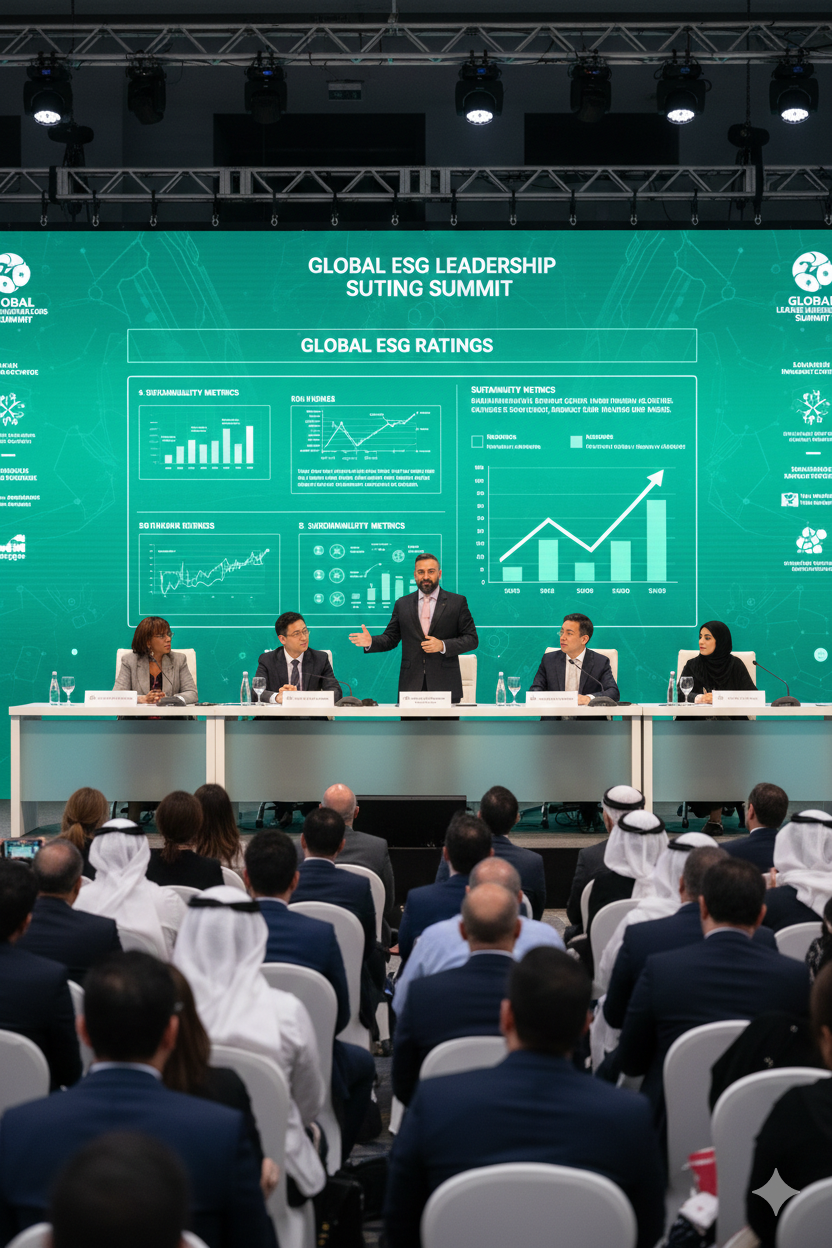


The Green Jobs challenge is how to identify practitioners from self-proclaimed experts thus affecting long term strategy, governance, and business outcomes.
LONDON, UNITED KINGDOM, January 7, 2026 /EINPresswire.com/ -- The green transition is creating millions of jobs, but it is also creating a quieter problem: an industry crowded with self-proclaimed experts and too few practitioners equipped to make sustainability economically meaningful. As ESG and sustainability roles multiply, many organizations remain unable to distinguish between reporting capability and strategic competence. In a transition driven as much by regulation, capital markets, and risk exposure as by climate ambition, this skills gap is becoming a material liability rather than a human-resources challenge.
The scale of the transition helps explain why this gap is widening. According to the International Labour Organization, the shift toward a low-carbon economy is expected to create 24 million new jobs globally by 2030, while displacing around 6 million, resulting in a net gain of 18 million jobs. Looking further ahead, projections from the World Economic Forum and IRENA suggest that by 2050, the energy transition alone could support more than 120 million jobs worldwide, spanning renewable energy, energy efficiency, carbon markets, data systems, and climate finance. Demand for sustainability and ESG practitioners is rising faster than corporate capacity to evaluate real competence.
Data already reflects this imbalance. Sustainability-related roles are among the fastest-growing job categories globally, with ESG analysts, carbon specialists, and sustainability managers increasingly embedded across finance, procurement, operations, and strategy. Yet many organizations continue to equate sustainability capability with the ability to produce a report. While regulatory reporting is necessary, it is not sufficient. A sustainability report is an output, not a strategy, and when sustainability functions are measured primarily on disclosure rather than decision-making, companies risk mistaking activity for impact.
True sustainability and ESG strategy is multi-faceted. It intersects directly with risk management and mitigation, resource planning and efficiency, cost of capital, access to investor pools, supply-chain resilience, regulatory exposure, and long-term commercial competitiveness. It requires fluency in data, economics, regulation, and corporate operations—not just familiarity with frameworks and templates. Yet many corporations struggle to distinguish between professionals who can operate at this level and those whose experience remains limited to compiling disclosures.
As the sustainability workforce expands, reliance on individual expertise alone introduces operational and reputational risk. Corporations increasingly need systems that embed best practice into how data is captured, structured, verified, and reused—regardless of who occupies a role at any given time. This is where infrastructure, rather than personalities, becomes critical.
The Paris Agreement Implementation Platform (PAIP) was designed to address this exact challenge. Rather than replacing practitioners, PAIP acts as an enabler: a data-centric infrastructure that supports corporate reporting, ESG ratings, and decarbonization pathways in a risk-mitigating, regulator-aligned, and best-practice-driven manner. By structuring emissions, performance, and activity data once, and allowing it to flow consistently across reporting, ratings, compliance, and strategy, PAIP reduces dependence on ad-hoc interpretation and individual discretion.
This approach becomes increasingly important as sustainability data takes on direct economic consequences. ESG ratings influence access to capital and investor pools. Carbon disclosures affect trade exposure through mechanisms such as carbon border adjustments. Climate risk assessments shape insurance costs, asset valuations, and long-term investment decisions. In this context, omissions, inconsistencies, or poorly contextualized data are not merely technical issues; they are strategic vulnerabilities.
Experienced practitioners understand this intuitively. Sustainability reports are read not only for what they state, but for what they omit, how assumptions are framed, how system boundaries are defined, and whether data can withstand scrutiny over time. Platforms that enforce consistency, traceability, and methodological alignment help mitigate the risk of unintentional misrepresentation while strengthening institutional credibility.
Looking toward 2030 and 2050, scrutiny will continue to intensify alongside job growth. Boards, investors, and regulators will increasingly differentiate between organizations that integrate sustainability into capital allocation, operational efficiency, and growth planning, and those that treat it as a compliance exercise. The former will build resilience and optionality; the latter will remain exposed to regulatory shocks, rising financing costs, and credibility gaps.
In this environment, the relevant question for corporations is no longer whether they have a sustainability team, but whether that team is empowered—and enabled—to influence core business decisions. If sustainability functions are confined to reporting cycles rather than embedded in strategy, risk management, and performance optimization, their mandate may need reconsideration.
The rise of green jobs represents one of the most significant labour-market shifts of this generation. Whether this growth translates into durable economic resilience or surface-level compliance will depend less on job titles and more on the systems that support them. Platforms like PAIP are not about replacing expertise, but about institutionalizing it—so that sustainability becomes a scalable capability rather than a fragile dependency.
About Green Economy Partnership
Green Economy Partnership (GEP) is a climate-tech and decarbonization infrastructure organization focused on enabling governments and corporates to implement the Paris Agreement in a consistent, auditable, and economically viable manner. GEP develops data-centric platforms that integrate artificial intelligence, blockchain, and economic modelling to support emissions reporting, ESG alignment, carbon markets, and decarbonization strategies, with a strong focus on regulated environments and the Global South. By bridging policy, data, and capital, GEP helps institutions manage climate risk, improve transparency, and unlock sustainable investment at scale. For more information, contact yallah@greeneconomy.ae or visit www.greeneconomy.ae.
Ivano Iannelli
Green Economy Partnership
+971 50 440 0162
email us here
Visit us on social media:
LinkedIn
Instagram
Legal Disclaimer:
EIN Presswire provides this news content "as is" without warranty of any kind. We do not accept any responsibility or liability for the accuracy, content, images, videos, licenses, completeness, legality, or reliability of the information contained in this article. If you have any complaints or copyright issues related to this article, kindly contact the author above.
